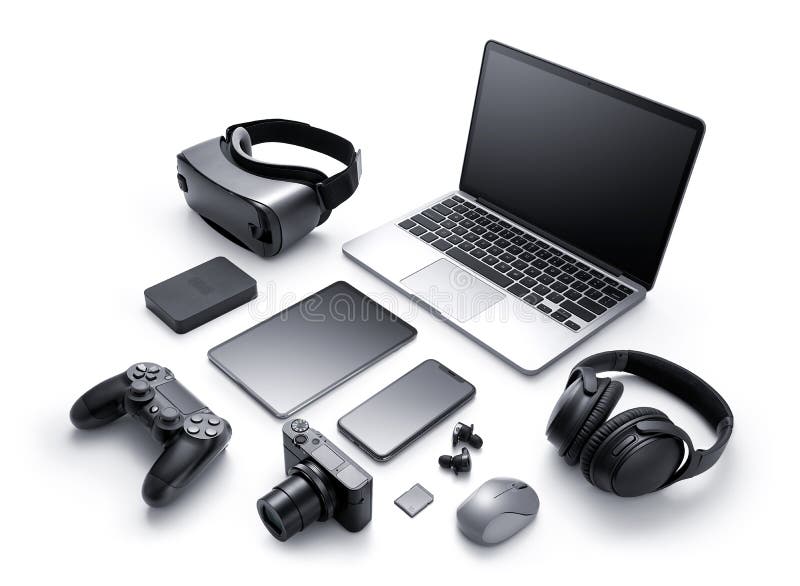
10 Mind-Bending Gadgets That Will Change Your Perception of Reality
In today's rapidly evolving tech landscape, mind-bending gadgets are emerging that challenge our perception of reality. These devices not only enhance our daily experiences but also redefine how we interact with the world around us. From virtual reality headsets that transport us to fantastical realms to augmented reality glasses that merge digital content with our physical surroundings, these innovations are reshaping our understanding of what is possible. Here are 10 gadgets that exemplify this transformative trend:
- Oculus Quest 2: A standalone VR headset that offers an immersive gaming experience.
- Microsoft HoloLens 2: An advanced AR headset that allows users to overlay digital objects onto their real environment.
- Magic Leap One: A spatial computing device that merges physical and digital worlds seamlessly.
- Emotiv Epoc X: A neurotechnology headset that translates brain activity into data, opening new doors in mental health.
- Samsung Galaxy Fold: A foldable smartphone that reinvents the concept of mobile devices.
- Tesla Model S with Autopilot: A car that offers an automated driving experience, blurring the lines between human and machine.
- GoPro MAX: A 360-degree camera enabling immersive storytelling.
- DJI Mini 2: A compact drone that provides stunning aerial views and perspectives.
- Leap Motion Controller: A device that enhances interaction with virtual environments using hand gestures.
- Nreal Light: Lightweight AR glasses designed for everyday use, highlighting how AR can be more integrated into our lives.
Counter-Strike is a popular series of multiplayer first-person shooter games that focus on team-based gameplay. Players can choose to be either terrorists or counter-terrorists, engaging in strategic combat to complete objective-based missions. For those looking to enhance their gaming experience, check out the Top 10 Google Pixel Accessories to optimize your setup. The game's competitive scene has also contributed to the rise of esports, with numerous tournaments held worldwide.
How Virtual Reality is Shaping Our Understanding of the World
Virtual Reality (VR) is revolutionizing the way we perceive and interact with the world around us. By immersing users in digitally created environments, VR allows individuals to experience places and scenarios that may be physically inaccessible. For instance, VR technology is being utilized for educational purposes, enabling students to explore historical sites, understand complex scientific concepts, and even simulate real-world applications of their studies. With the help of VR, learning has become an engaging adventure, offering experiential knowledge that enhances retention and understanding.
Furthermore, VR is playing a significant role in empathy-building and social awareness. Through immersive storytelling, users can step into the shoes of others, experiencing their challenges and emotions firsthand. This powerful tool is being employed in various fields, including psychology, training, and even humanitarian efforts. By fostering a deeper emotional connection to diverse perspectives, VR has the potential to promote social change and encourage a more compassionate understanding of global issues. As Virtual Reality continues to evolve, its impact on our comprehension of the world will undoubtedly grow, shaping not only our understanding but also our response to the complex challenges we face.
Are Smart Mirrors the Future of Home Technology or Just a Fad?
The rise of smart mirrors in recent years raises an intriguing question: are they the future of home technology or merely a fleeting trend? These high-tech devices integrate various functionalities, such as personal assistants, touch screens, and augmented reality features, into elegant reflective surfaces. Users can check the time, weather, or even their calendar while getting ready in the morning. The versatility and multifunctionality of smart mirrors have generated significant buzz, making them appear to be a revolutionary addition to modern homes.
However, detractors argue that while smart mirrors offer impressive features, they might not be essential for every household. Many consumers question the actual practicality of having a mirror that displays news headlines or social media updates when this information is readily available through smartphones or smart speakers. Additionally, the high price point of these devices can be a barrier for some. As technology continues to evolve, it remains to be seen whether smart mirrors will establish themselves as a mainstay in home tech or if they will fade into obscurity like many other fads.