Understanding USB Power Delivery: How It Transforms Charging
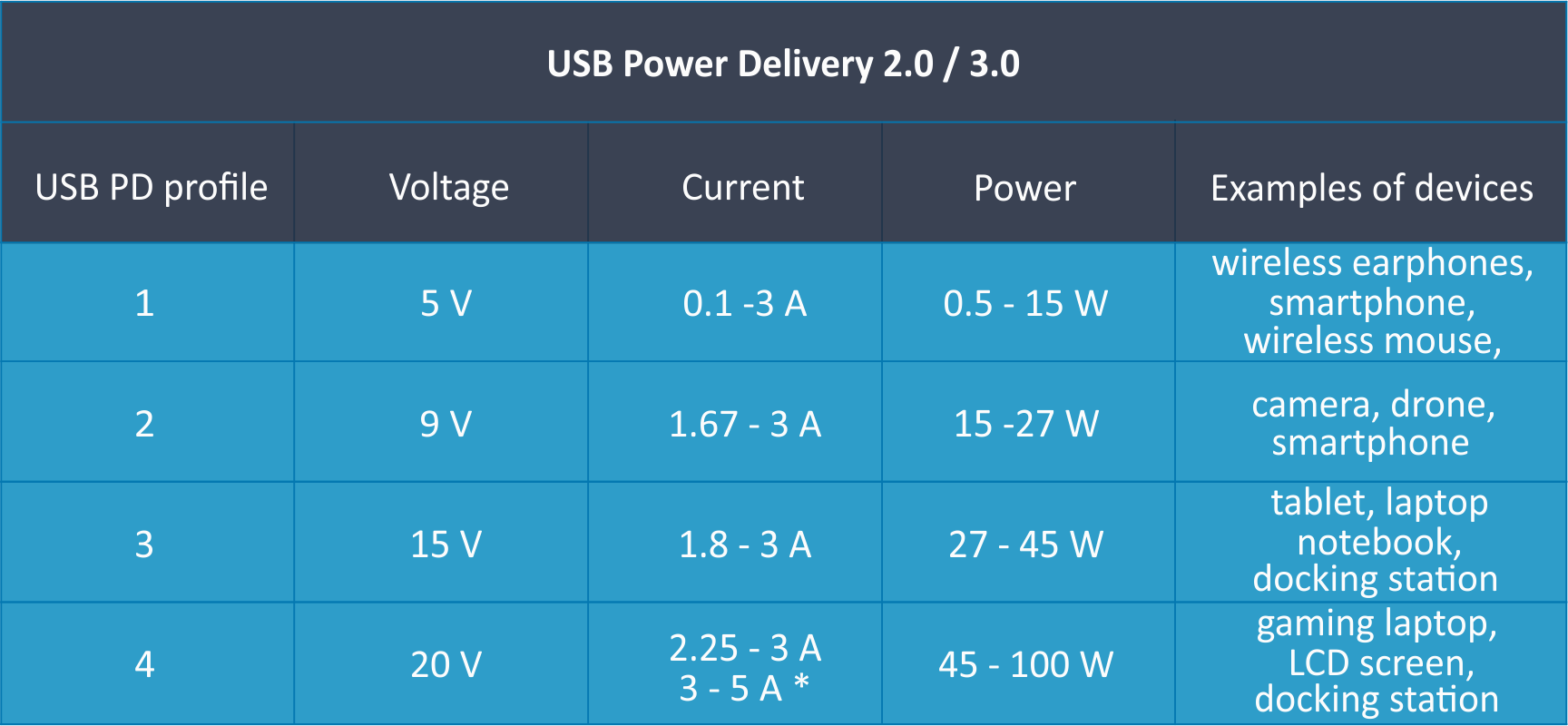
USB Power Delivery (USB PD) is an innovative charging standard that revolutionizes how devices are powered. Traditional USB charging methods often limited the amount of power that could be transferred, typically capping at 5 watts. However, USB Power Delivery allows for up to 100 watts of power transfer, enabling fast charging capabilities for a wide range of devices, including smartphones, tablets, and laptops. This not only means quicker charging times but also the ability to charge larger devices that require more power. The flexibility and efficiency of USB PD create a seamless charging ecosystem, reducing the number of different chargers needed for various devices.
One of the key features of USB Power Delivery is its intelligent communication protocol, which allows devices to negotiate the optimal power level needed. This means that the power supply and the device can communicate and adjust the charging rate based on the device's requirements, ensuring safe and efficient charging. Additionally, USB PD is compatible with multiple USB cables, providing versatility in how devices can be charged. Whether you're using a USB-C to USB-C cable or a USB-C to USB-A, the adaptability of USB Power Delivery simplifies the user experience while enhancing performance.
Counter-Strike is a popular tactical first-person shooter game that has captivated players around the world since its initial release in 1999. It features team-based gameplay where players can choose to be part of the terrorist or counter-terrorist team. As gaming has evolved, so has the series, leading to the latest iteration, CS:GO, which continues to dominate esports and casual play alike. For those looking to enhance their gaming setup, it's also important to consider great accessories, such as the Top 10 Travel USB C Hubs that can improve connectivity on the go.
The Future of Fast Charging: Exploring Power Delivery Technologies
The future of fast charging is evolving rapidly, driven by advances in Power Delivery technologies that promise to enhance the efficiency and speed of charging devices. As mobile devices and electric vehicles become more integral to our daily lives, the demand for faster, safer, and more efficient charging solutions is higher than ever. Innovations such as USB Power Delivery (USB PD) and various proprietary technologies are paving the way for a new era in charging capabilities, enabling devices to charge within minutes rather than hours. Smart charging solutions are also on the horizon, utilizing machine learning algorithms to optimize power delivery based on user behavior and device needs.
Moreover, the implementation of GaN (Gallium Nitride) technology is revolutionizing the charging landscape by enabling smaller, lighter, and more efficient chargers that deliver higher power levels. This advancement signifies a shift toward more sustainable energy usage, aligning with global efforts to transition to greener technologies. As we look to the future, the potential for fast charging extends beyond just convenience; it represents a significant step toward enhancing user experiences and reducing downtime. In the coming years, we can expect to see continued collaboration between tech companies and standards organizations to further enhance Power Delivery technologies and drive the widespread adoption of revolutionary charging solutions.
How Does Power Delivery Work? A Deep Dive into the Mechanics
Power delivery is a crucial technology that ensures efficient energy transfer between devices. At its core, power delivery (PD) enables devices to communicate over a USB connection to identify their power requirements and capabilities. This communication occurs through a specific protocol that allows devices, such as smartphones, laptops, and chargers, to negotiate the appropriate voltage and current levels. Typically, conventional USB specifications limited power delivery to a few watts, but with advancements in power delivery technology, devices can now exchange up to 100 watts, significantly enhancing charging speeds and efficiency.
The mechanics behind power delivery involve a combination of advanced hardware and software protocols. When two PD-enabled devices are connected, they establish a power contract, determining the optimal power flow. The USB Power Delivery Specification facilitates this by defining a range of voltages (from 5V to 20V) and currents that can be used for charging. Additionally, this specification allows for bi-directional power flow, meaning that power can be sent or received depending on the device's needs. This dynamic adaptability ensures that the correct power is delivered efficiently, making power delivery an essential feature in modern electronics.